

CG Policy · 2025
In this section7 topics
Corporate Governance Policy
Has a Corporate Governance Policy
Yes
Policy Description
The Board of Directors recognizes the importance of good corporate governance to ensure the Company's business operations are efficient, transparent, creates confidence among all stakeholders, enhance competitiveness, achieve good performance, and sustainable growth. The Company has therefore established a Good Corporate Governance Policy in writing to foster understanding and serve as a guideline for Directors, executives, and employees to adhere to the Principles of Good Corporate Governance for Listed Company of 2017 (CG Code) of the Securities and Exchange Commission (SEC) and the Stock Exchange of Thailand, as well as the criteria under the Corporate Governance Report of Thai Listed Companies (CGR) project of the Thai Institute of Directors Association. Furthermore, the policy has been published on the company's website at www.snpfood.com for the information of shareholders, stakeholders, investors, and other interested parties.
At the Board of Directors Meeting No. 6/2568 on December 11, 2025, the Board of Directors considered reviewing and revising the principles of good corporate governance to ensure they are comprehensive, up-to-date, and consistent with relevant laws, regulations, and practices, thereby elevating the Company's corporate governance standards to suit the current context.
Policy Document Link
https://www.snpfood.com/en/corporate-governance/corporate-governance-policy
Policy & Practices — Board of Directors
Has Policy & Guidelines for the Board
Yes
Board Guidelines
| Guideline | Other — Please Specify | Detail | ||||||||||||
|---|---|---|---|---|---|---|---|---|---|---|---|---|---|---|
| Nomination of Directors | The Board of Directors assigns the Nomination and Remuneration Committee the responsibility for nominating Directors, Independent Directors, and senior executives through a transparent and clear process. This involves considering and screening individuals with appropriate qualifications in accordance with the Board of Directors' Charter, as well as other relevant criteria, and proposing their appointment for consideration by the Board of Directors or seeking approval for appointment from the shareholders' meeting in accordance with the Company's Articles of Association, with transparency, fairness, and accountability. The Nomination and Remuneration Committee will review the qualifications and overall composition of the Board of Directors to align with the Company's business strategy. This will be done by preparing a Board Skill Matrix to define the criteria for desired Directors and to identify essential skills currently lacking within the Board. Furthermore, the Nomination and Remuneration Committee will consider Board Diversity, to include a variety of skills, knowledge, abilities, experience, expertise beneficial to business operations, or other specific qualifications, without limitation based on gender, skin color, race, religion, age, nationality or origin, marital status, political opinions, and will uphold integrity and honesty. For the consideration of re-appointing existing Directors for another term, the Nomination and Remuneration Committee will consider various factors, including performance, attendance and participation in meetings, and support for the Board of Directors' activities. In the case of Independent Directors, their independence will also be taken into consideration. The Company provides shareholders with the opportunity to nominate qualified individuals for consideration as Directors at the Annual General Meeting of Shareholders in advance. The criteria for such nominations are published on the Company's website. Individuals appointed as Directors or executives of the Company must possess full qualifications as stipulated in Section 68 of the Public Limited Company Act B.E. 2535 (including any amendments) and the announcements of the Securities and Exchange Commission. Furthermore, they must not possess any prohibited characteristics as defined by the Securities and Exchange Act (including any amendments), other laws, and relevant regulations. In 2025, no shareholders nominated individuals for election as Directors of the Company. | |||||||||||||
| Determination of Director Remuneration | The Board of Directors assigns the Nomination and Remuneration Committee to consider the establishment of a fair and reasonable remuneration policy for Directors and executives, consistent with the Company's strategies and goals, scope of responsibilities, and duties. This is done benchmarking against listed companies on the Stock Exchange of Thailand within the same industry group and companies of a similar size and remuneration survey data remuneration for Directors provided by the Thai Institute of Directors Association (IOD) at a level that can attract Directors and executives to work with the Company and lead the organization to achieve its defined short-term and long-term goals. Furthermore, the Company's performance and the performance evaluation results of each Director are also taken into consideration. Directors' remuneration is provided in the form of monthly remuneration, meeting allowances, and annual bonuses. The Nomination and Remuneration Committee will initially consider and determine the remuneration for the Board of Directors and propose such to the Board of Directors for submission to the Shareholders' Meeting for further approval. Regarding the remuneration for senior executives, including the Chief Executive Officer, the Nomination and Remuneration Committee will consider remuneration, including salary and bonuses, based on Key Performance Indicators (KPIs). This encompass various dimensions, including corporate governance and economic aspects, environmental aspects, and social aspects (ESG), in both monetary and non-monetary forms, in line with the Company's short-term and long-term operational strategies and consistent with the Company's performance. | |||||||||||||
| Independence of the Board of Directors from the Management | The Company stipulates a clear segregation of duties and responsibilities between the Board of Directors and management to ensure checks and balances and oversight of management, where the Board of Directors is responsible for overseeing the company's operations to comply with laws, objectives, company regulations, resolutions of the shareholders' meeting, and corporate governance policy, and is responsible for considering and approving overall policies and matters of significant importance to business operations. Management is responsible for successfully implementing the company's strategies and objectives in accordance with the policies set by the Board, including managing the daily operations and business of the organization. | |||||||||||||
| Director Development | To ensure the effective performance of the Board of Directors, the Company's Board of Directors has a policy to encourage Directors and senior executives to attend training courses beneficial to their duties, by inviting specialized experts to provide knowledge to directors and executives within the company, or by participating in training with external institutions such as the Thai Institute of Directors Association (IOD) and the Listed Companies Association. Director Orientation The Company prioritizes on conducting orientation for all new Directors to ensure they are aware of their roles, duties, and responsibilities, as well as to provide knowledge and understanding of the Company's business and various operations, to prepare them for their duties. The Company Secretary is assigned to present documents and information beneficial to the new Directors' duties, including: Company history, vision, mission, goals, objectives, business strategic plan, business characteristics, and Company products, Memorandum of Association, Company Articles of Association, Company structure, roles, duties, and responsibilities of the Board of Directors and sub-committees, Good Corporate Governance Policy, Business Ethics, various policies, Form 56-1 One Report, and the annual schedule of Board of Directors meetings. In 2025, the Company conducted orientation for one new Director, Mr. Chaiyapat Paitoon. | |||||||||||||
| Board Performance Evaluation | The Company arranges performance evaluations for the Board of Directors and all sub-committees at least once a year at the end of each year. The Nomination and Remuneration Committee is responsible for defining the performance evaluation process, providing recommendations, reviewing evaluation forms, and summarizing the evaluation results of the Board's performance. The evaluation forms comprise the evaluation form for the Board of Directors as a whole, the self-evaluation form for individual Directors, and the evaluation form for each sub-committee. Performance Evaluation Process: The Nomination and Remuneration Committee assigns the Company Secretary to distribute all evaluation forms to each Director for evaluation. This includes the evaluation of the entire Board, self-evaluation by individual Directors, and the evaluation of sub-committees on which they serve. Subsequently, the Company Secretary will collect the evaluation forms for processing, as well as summarizing comments and recommendations, to be presented to the Nomination and Remuneration Committee and for reporting to the Board of Directors. The Board of Directors will then utilize the evaluation results and recommendations to develop and improve the performance of its duties and enhance the operational efficiency of the Board of Directors and its sub-committees. | |||||||||||||
| Corporate Governance of Subsidiaries and Associated Companies | The Company has a policy to supervise its subsidiaries and associated companies as if they were integral units of the Company, to ensure that their operations align with the Company's core policies. The Company will appoint qualified individuals, approved by the Board of Directors' meeting, to serve as Directors and/or executives of the subsidiaries and associated companies, at least in proportion to the Company's shareholding in those subsidiaries and associated companies. The Company has policies for corporate governance in various aspects, with the same criteria as the parent company. These include appropriate internal control policies, policies for monitoring the management of subsidiaries and associated companies to safeguard the Company's investment interests, as well as financial control policies. Subsidiaries and associated companies are required to submit monthly operational performance reports and quarterly financial statements reviewed by auditors to the Company for the preparation of consolidated financial statements. They are also required to prepare operational budgets and quarterly summaries comparing actual operational results against planned operations. Furthermore, they must monitor operational performance to ensure alignment with plans and report to the Company. | |||||||||||||
| Other guidelines regarding the board of directors | Investor Relations | The Board of Directors places great importance on the disclosure of adequate, accurate, precise, and timely information, including both financial reports and general information. An Investor Relations unit has been established, and an Investor Relations Code of Conduct, which clearly defines roles and responsibilities, has been formulated and published on the Company's website. The Investor Relations unit prepares an annual investor relations plan and be responsible for providing effective methods, channels, and information to communicate with shareholders, investors, and fund managers regarding the Company's vision, strategies, financial information, and operating results. In the past year, the Company has communicated with investors through various channels, including: disseminating news and information to the Stock Exchange of Thailand (SET) and the Securities and Exchange Commission (SEC); conducting performance explanation meetings through the "Opportunity Day" event for listed companies to meet investors; providing company summaries (Factsheet and Company Snapshot); answering investor inquiries via email at irsnp@snpfood.com; and presenting various information through the company's website at www.snpfood.com. Furthermore, the Company disseminates press releases regarding business movements and the progress of various projects to the media, as well as responding to inquiries and coordinating with the media and the public. Mrs. Maneesuda Sila-On, Chief Sustainability and Corporate Communications Officer, is responsible for overseeing the Company's public relations. In 2025, the Company participated in the Opportunity Day event a total of 2 times via the Stock Exchange of Thailand's streaming system, as follows:
| ||||||||||||
| Other guidelines regarding the board of directors | Securities Holding Report | The Company has a policy requiring Directors and senior executives to report changes in the Company's securities holdings to the Office of the Securities and Exchange Commission in accordance with Section 59 of the Securities and Exchange Act B.E. 2535 (1992) within 3 business days from the date of such change. They are also required to notify the Company Secretary of these changes. Furthermore, the Company has a policy prohibiting Directors and senior executives from engaging in transactions (buying, selling, transferring, or receiving transfers) of the Company's securities within 30 days prior to the disclosure of the Company's financial information and financial statements to the public, the Stock Exchange of Thailand, and the Office of the Securities and Exchange Commission. The Company Secretary will notify individuals required to report securities holdings of the Blackout Period in advance via individual email. Additionally, the Company Secretary will report information on the securities holdings of Directors and executives at every quarterly Board of Directors' meeting. | ||||||||||||
| Other guidelines regarding the board of directors | Information Technology Governance | Information Technology Governance Policy The Board of Directors recognizes and places great importance on the governance and management of information technology security in the digital era, considering it a crucial foundation for sustainable business operations and for building confidence among all stakeholders. To systematically manage and control cyber risks, the Company has adopted the ISO/IEC 27001 international standard framework as its primary guideline for establishing control measures and ensuring that the Company can effectively respond to cyber threats in a manner appropriate to the business environment. The Company's IT governance strategy is based on two policy pillars: People and Governance and Process. To ensure effective and measurable strategy implementation in 2025, initiatives have been grouped according to three operational dimensions: 1. People, 2. Internal Defense, and 3. External Defense. The Company has initiated several cybersecurity promotion projects aligned with these approaches to elevate the organization's security standards in a concrete manner. Cybersecurity Promotion Projects Implemented in 2025 In 2025, the Digital and Technology Department implemented various projects with clear objectives to strengthen security across different dimensions, in line with the established strategic guidelines. The performance results for each project can be summarized as follows: 1. Personnel (People): Building defenses from personnel (Human Firewall) The Employee Training Project (IT Code of Conduct) primarily aims to foster a security culture throughout the organization and raise awareness about various forms of cyber threats, enabling employees to become effective "Human Firewalls." This helps reduce risks arising from human error, which is one of the main attack vectors, and strengthens the organization's first line of defense. Performance Results: The project achieved outstanding success, with an attendance and completion rate of 99% for all employees, and 100% coverage of mandatory courses. 2. Internal Defense: Proactive Strengthening 2.1 Vulnerability Assessment Project: This project aims to proactively inspect systems, identify, and assess vulnerabilities that could pose risks to the Company's digital infrastructure, thereby preventing system failures and closing vulnerabilities before they can be exploited. Performance Results: The first round of system scanning successfully identified and closed all high-risk vulnerabilities. However, the second round of monitoring scans detected new risks at normal and low levels, which require continuous follow-up. This data confirms the necessity of a consistent proactive assessment strategy to address the ever-changing threat landscape. 2.2 ISO/IEC 27001 Gap Analysis Project: This project was initiated to analyze the gaps in the Company's existing information security control measures against the requirements of the ISO/IEC 27001 international standard, providing a clear overview of the current status and enabling targeted development planning. Evaluation Results: Some control measures are not yet fully compliant with standards, providing crucial insights for prioritizing strategic operational plans for 2026. 3. External Defense: Simulated Penetration Testing The Penetration Testing project aims to simulate attacks from malicious actors to test the strength of defense systems, the speed of threat detection, and the overall security of externally accessible systems. The goal is to enhance the security of financial transactions and credit card data to protect the Company's online revenue streams. Performance Results: The first round of testing successfully identified and closed vulnerabilities. The second round of follow-up testing confirmed that no new critical vulnerabilities emerged. These test results underscore the constantly changing nature of external threats and prove the necessity of continuous testing for system security. Summary of Performance and Achievements for 2025 The performance of the Digital and Technology Department in 2025 demonstrates excellence in both strategic implementation and operational management, achieving all set goals. This represents a significant success in building confidence and security for the organization. The three key outstanding performance areas are as follows:
Cybersecurity Operational Plan for 2026 With an unwavering commitment to continuous development, the Digital and Technology Department has developed a Project Roadmap for 2026 to build upon past successes and elevate cybersecurity standards to the next level, preparing for future threats. Project Plan for 2026:
The Company is fully prepared to address ever-evolving cyber challenges and remains committed to leveraging technology as a crucial tool to drive the organization towards stable and sustainable growth. | ||||||||||||
| Other guidelines regarding the board of directors | Intellectual Property | The Company has a policy and practices regarding the non-infringement of intellectual property, and does not support actions that constitute intellectual property infringement as defined by intellectual property law. Furthermore, should the company discover any intellectual property infringement, it will promptly take appropriate steps to terminate or block access to the alleged infringing content. | ||||||||||||
| Other guidelines regarding the board of directors | Complaint Submission and Whistleblowing | The Board of Directors prioritizes good corporate governance and considers ethical business operations. Therefore, stakeholders are provided with the opportunity to submit complaints regarding the Company's products and services via email: crm@snpfood.com. For complaints concerning corruption or non-compliance with laws, regulations, Company by-laws, and ethics occurring within the Company, complaints and tips can be submitted via email: whistleline@snpfood.com or by mail to the Internal Audit Office, S&P Syndicate Public Company Limited, Address: 2034/100-103 Italthai Tower, 23rd Floor, New Petchburi Road, Bang Kapi Sub-district, Huai Khwang District, Bangkok 10310. | ||||||||||||
| Other guidelines regarding the board of directors | Measures for non-compliance with policies and guidelines | The Company provides a process for appropriately and fairly penalizing those who violate policy compliance. Such Individuals will be subject to disciplinary action in accordance with Company regulations and legal penalties, as the case may be. The Company will appoint a working committee to investigate various incidents that occur as deemed appropriate for each case. |
Policy & Practices — Shareholders and Stakeholders
Has Policy & Guidelines for Shareholders and Stakeholders
Yes
Shareholder & Stakeholder Guidelines
| Guideline | Other — Please Specify | Detail |
|---|---|---|
| Shareholder | The Board of Directors values and respects the rights of all shareholder groups equally and encourages shareholders to exercise their rights, especially their fundamental rights, which include the right to buy, sell, or transfer their shares, the right to a share in the Company's profits, the right to receive sufficient, accurate, and timely Company information, the right to attend and vote at the Annual General Meeting of Shareholders to appoint or remove Directors, appoint auditors, the right to propose agenda items in advance, including nominating individuals for election as Company Directors, and matters affecting the Company's business direction, among others. The Company will not take any actions that violate or infringe upon the rights of shareholders, with details as follows:
The Company provides an opportunity for minority shareholders to propose agenda items and nominate individuals for election as Company Directors at the Annual General Meeting of Shareholders. One or more shareholders holding shares with voting rights totaling not less than 5% of the Company's issued and paid-up shares may propose agenda items for the Annual General Meeting of Shareholders and nominate individuals for election as Company Directors in advance. This is announced through the Stock Exchange of Thailand and the criteria and methods for proposal are published on the Company's website at www.snpfood.com. For the 2025 Annual General Meeting of Shareholders, the Company provided an opportunity for shareholders to exercise their right to propose agenda items and nominate individuals for election as Company Directors from November 8, 2024, to December 30, 2024. Additionally, the Company allowed shareholders to submit questions in advance for the shareholders' meeting from March 24, 2025, to April 21, 2025. Upon the expiration of the said period, it was found that no shareholders proposed agenda items, nominated individuals for election as Company Directors, or submitted questions in advance.
The Company discloses important Company information to shareholders and general investors completely, accurately, sufficiently, reliably, and in a timely manner, and does not engage in any actions that limit shareholders' opportunities to access Company information. This information is disseminated through the Stock Exchange of Thailand's news dissemination system and the Company's website at www.snpfood.com, in both Thai and English.
The Company has a policy to encourage all shareholder groups, including institutional shareholders, to exercise their rights to attend and vote at meetings. In cases where shareholders and institutional shareholders are unable to attend the shareholders' meeting, the Company facilitates this by offering three types of proxy forms as prescribed by the Department of Business Development of the Ministry of Commerce, to allow proxies to choose the most suitable option for their needs. Furthermore, the Company refrains from any actions that would limit shareholders' opportunities to attend meetings. The Company also utilizes technology at shareholders' meetings to promote transparency. For the 2025 Annual General Meeting of Shareholders held on April 22, 2025, the Company has established guidelines for organizing and conducting the meeting as follows: Before the Meeting 1. The company provided an opportunity for shareholders to propose agenda items and nominate individuals for election as Company Directors from November 8, 2024, to December 30, 2024, and to submit questions in advance for the shareholders' meeting from March 24, 2025, to April 21, 2025. The criteria and methods for submission were announced via the Company's website and news was disseminated through the Stock Exchange of Thailand's information disclosure system. Upon the expiration of the said period, it was found that no shareholders proposed agenda items, nominated individuals for election as Company Directors, or submitted questions in advance. 2. The Company prepares the notice of the shareholders' meeting in both Thai and English, specifying the date, time, venue, agenda items, Directors' opinions, objectives, and reasons, along with supporting information for consideration on various agenda items, registration procedures, documents, and evidence for proxy appointment, including proxy forms Type A, Type B, and Type C as prescribed by the Ministry of Commerce. Shareholders may appoint any individual to attend and vote on their behalf. The Company has proposed at least one Independent Director as an option for shareholders to appoint as a proxy. Each share carries one vote. The Company's Articles of Association, specifically those related to shareholders' meetings, registration methods, and voting procedures, have been published along with the meeting documents on the Company's website and announced through the Stock Exchange of Thailand's news dissemination system starting from March 24, 2025, which is 29 days prior to the shareholders' meeting, to allow shareholders to review the meeting information. The Company has also assigned Thailand Securities Depository Co., Ltd., which is the company's registrar, to dispatch notice the meeting to shareholders via registered mail on March 31, 2025, which is 22 days in advance of the meeting. 3. The Company allows shareholders to register and submit applications to attend the meeting via electronic media. The registration system for submitting applications was opened in advance from April 10, 2025, with details and procedures already communicated to shareholders in the notice of the meeting. Date of Shareholders' Meeting 1. The Company held its Annual General Meeting of Shareholders for 2025 on April 22, 2025, at 2:00 PM, broadcast from S&P Hall, Sukhumvit 26, No. 1/2 Soi Atthakavee, Sukhumvit 26 Road, Khlong Tan Subdistrict, Khlong Toei District, Bangkok, solely in the form of an electronic meeting (E-AGM). The meeting was conducted in accordance with the Emergency Decree on Electronic Meetings B.E. 2563 (2020) and the Notification of the Ministry of Digital Economy and Society regarding Security Standards for Electronic Meetings B.E. 2563 (2020). The Company engaged Inventech Systems (Thailand) Co., Ltd., an expert and certified electronic meeting service provider, to manage the electronic meeting. This included the certified meeting control system (Cisco Webex) and the Inventech Connect voting system, which has undergone self-assessment for compliance by the Electronic Transactions Development Agency. Furthermore, the Company invited external legal advisor Ms. Sutaporn Rianvijit from Sutapijit Co., Ltd. to observe the meeting to verify voting, act as an impartial party in counting votes for each agenda item, and ensure the meeting was conducted transparently, legally, in accordance with the Company's Articles of Association, and good corporate governance principles. 2. At the 2025 Annual General Meeting of Shareholders, the Chairman of the Board, chairpersons of sub-committees, senior executives, auditors, and independent legal advisors attended the meeting to answer various questions. A total of 12 Directors attended the meeting out of 12 Directors of the Company (representing 100% of the total proportion of Directors). 3. Before the commencement of the meeting, the Chairman instructs the meeting facilitator to inform shareholders of the procedures for conducting and voting at the meeting, the number and proportion of shareholders attending in person and by proxy, the meeting procedures, voting, and vote counting. For the agenda item concerning the appointment of Directors, the Company provides an opportunity for shareholders to vote for individual Directors. 4. The Chairman of the meeting is responsible for controlling the meeting to comply with the Company's Articles of Association, relevant laws, and regulations, by conducting the meeting according to the agenda sequence specified in the notice of meeting sent to shareholders in advance. Opportunities are provided for shareholders to express opinions, make suggestions, or ask questions on various agenda items, with appropriate and equal time allocated for shareholders for each item. The Company Secretary will record questions, answers, suggestions, and comments in the meeting minutes. The Company has no policy to add new agenda items or change the order of agenda items. 5. The Company informs the meeting of the vote count results for each agenda item after the voting for that item has concluded. The resolutions for each agenda item are categorized as "For," "Against," and "Abstain." After the Meeting 1. The Company Secretary records the resolutions of the Annual General Meeting of Shareholders and disseminates the meeting resolutions along with the voting results for each agenda item through the Stock Exchange of Thailand's news dissemination system on the same day as the shareholders' meeting, as well as publishing them on the company's website. 2. The Company arranges for video and audio recording during the meeting and publishes them on the Company's website. 3. The Company Secretary prepares the minutes of the Annual General Meeting of Shareholders, accurately and completely recording information including the names of Directors and executives who attended the meeting, voting procedures, questions, answers, comments, meeting resolutions, and voting results (For, Against, or Abstain) for each agenda item. The said minutes, certified by the Chairman of the Board who presided over the meeting, are submitted to the Stock Exchange of Thailand on May 6, 2025, and also published on the Company's website within 14 days as per the established criteria. | |
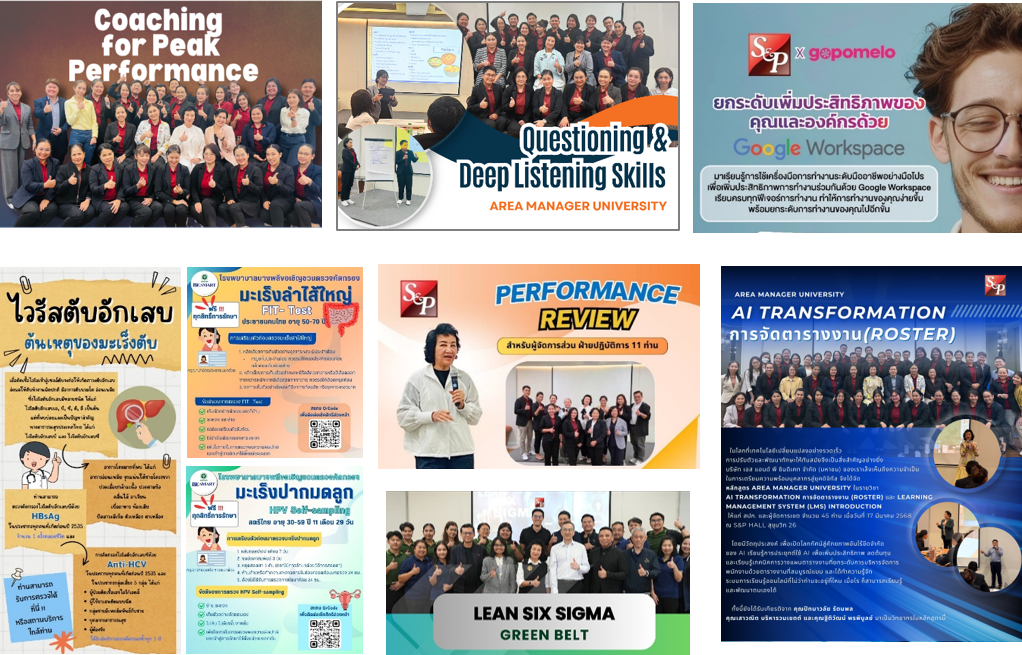
| Employee | The Company always recognizes that employees are valuable resources and key factors enabling the Company to achieve its set goals. Therefore, the Company has established a policy to treat employees fairly, without discrimination, providing equal opportunities, respecting their honor, dignity, and personal rights. It has a policy for fair compensation and welfare for employees and executives, appropriate to the nature of work, knowledge, abilities, and responsibilities, linked to the performance of each employee and executive, and consistent with Companies in the same industry and business growth rates. The Company conducts annual performance evaluations for employees and executives, utilizing competency-based assessments alongside Key Performance Indicators (KPIs). This ensures that evaluations cover potential, skills, behavior, and work outcomes aligned with organizational roles and goals. Such evaluations encompass both short-term performance and progress according to long-term strategic plans, enabling the Company to systematically develop personnel, enhance work efficiency, and build confidence that everyone is moving in the same direction transparently and with standards. Furthermore, the Company continuously implements personnel potential development projects through various important training courses throughout the year, both online and onsite, to ensure employees possess quality, operational standards, and maximum work efficiency. Examples include the SOP Workshop project to elevate operational standards and review work procedures for efficiency, the AI Transformation course to promote the use of artificial intelligence technology for increased speed and accuracy in work, and online training in collaboration with GoPomelo to develop employees' Google Workspace skills, enabling them to use digital tools professionally. All these operations reflect the Company's commitment to systematically and continuously developing the knowledge and potential of its personnel sustainably. Personnel Development S&P Syndicate Public Company Limited places importance on human resource development, which is the main force driving organizational efficiency. In 2025, the Company launched projects under the concept of "Performance with Purpose – Driving Productivity by aligning Performance with clear goals and accountability," with the objectives of enhancing work efficiency, developing personnel skills, and focusing on safety and occupational health, as follows: 1. Projects to Enhance Work Efficiency 1.1 "Work Process Transformation Workshop" course – a practical training to elevate work standards, ensuring all departments have modern and efficient operational manuals, along with clearly defined control points. This includes reviewing and reducing unnecessary steps, and considering the adaptation and implementation of technology in operations. 1.2 "LEAN Training and Workshop" course – focuses on fostering a "LEAN" work culture by providing knowledge and understanding of Lean principles and various tools to continuously develop and improve work methods for maximum efficiency. The overall projects presented in the training can reduce costs by up to 30 million baht per year. 2. Projects for Personnel Skill Development 2.1. "AI Transformation" course - the application of Artificial Intelligence (AI) to assist in operations, including processing and summarizing data, to increase accuracy and reduce working time. 2.2. Training "Performance Review: PDCA Course" - which focuses on shifting from ad-hoc problem-solving to systematic work, involving planning, checking, and using results for continuous improvement. It applies the PDCA cycle to effectively solve problems, improve personal work processes, promote teamwork, and communicate work improvement information to establish standards and prevent recurring issues. 2.3. Training "Questioning & Deep Listening Skills Course" To enhance personnel's questioning and effective listening skills. 2.4. Training "Coaching for Peak Performance Course" to develop supervisors' abilities and skills to unlock the potential of their subordinates, enabling them to achieve set goals through thought-provoking questioning, leading coachees to find their own answers and approaches. 2.5. "Manufacturing Management Trainee" Project: The Company has opened the path to creating new-generation leaders by seeking out talents in STEM fields to cultivate them into 'Future Leaders' or new-era factory managers. These leaders will elevate production lines to excellence and smart factory status (Excellent Smart Factory) through strategic learning and hands-on practice within international standard systems over 12 months, focusing on innovation, continuous improvement, and readiness to become front-line successors who will drive the organization's sustainable and graceful growth. 2.6. "Online Training Management" - The Digital and Technology Department, in collaboration with GoPomelo, organized online training via Google Meet to develop personnel's ability to use tools in Google Workspace and professionally utilize all functional features. 3. Projects for Safety and Occupational Health (Workplace Safety) 3.1. Training course: "Safety, Occupational Health, and Working Environment Committee" - to enhance the necessary knowledge and skills for committee members to perform their duties effectively, including understanding their legal roles and responsibilities, identifying and assessing workplace risks, proposing appropriate preventive measures, and systematically monitoring problem resolution. It also aims to develop communication and teamwork skills among committee members, management, and employees to foster a safety culture within the organization and achieve the goals of accident prevention, loss reduction, and creating a safe and sustainable working environment. 3.2. Health activities to enhance employee health and quality of life, such as the S&P Badminton Club, the 4-strain influenza vaccination program, cervical cancer screening, hepatitis B and C virus screening, and hand grip strength assessment.
| |
| Customer | The Company is committed to developing the quality and standards of its products so that they are delicious, safe, and nutritionally sound, commensurate with the trust S&P has receive from its customers. The Company delivers quality products and services under fair conditions. Furthermore, the Company is dedicated to responsible marketing by providing accurate and sufficient information about its products and services to enable customers to make informed decisions through various sales channels, such as services offered at S&P stores, online communication channels, and applications. The Company provides channels for receiving customer complaints to promptly prevent and resolve issues for customers and to utilize such information for further improvement or development of products and services. Additionally, the Company has a policy to maintain the confidentiality of customer information by not disclosing it or using such information improperly. | |
| Business competitor | The Company maintains a policy towards its business competitors by not violating or acquiring their trade secrets through dishonest or inappropriate means. It operates under the principles of fair competition, refrains from creating unfair competitive advantages, and does not damage competitors' reputations through malicious accusations. Furthermore, it promotes free trade by neither supporting nor encouraging trade monopolies. | |
| Business partner | The Company prioritizes fair and equitable treatment of its business partners, considering mutual benefits, adhering to contracts, operating within a framework of honest and transparent commercial competition, and respecting each other's rights. Furthermore, the Company does not solicit or accept any assets or benefits from business partners, nor does it purchase goods from business partners who infringe intellectual property rights, violate human rights, or engage in unlawful activities. | |
| Creditor | The Company maintains a policy of fair and responsible treatment of creditors, strictly adhering to the terms and conditions stipulated in agreements regarding principal repayment, interest, collateral management, and guarantee conditions. Should the Company be unable to comply with the agreed terms and conditions, it will inform creditors in advance to jointly consider solutions. and reports its financial status to creditors in accordance with the loan agreement's stipulations, accurately, completely, and without misrepresenting facts. | |
| Government agency | The Company will strictly adhere to regulations, laws, and frameworks, as well as study innovative concepts, good nutrition, and beneficial practices at the United Nations level to adopt as guidelines in its role as a leader in the Thai food and bakery business. | |
| Community and society | The Company prioritizes community, society, and environmental conservation, recognizing its role as an integral part of society committed to sustainably developing and improving society and the environment. Consequently, the Company has established a dedicated unit responsible for overseeing and implementing activities for the community and wider society. This unit also promotes organizational culture and fosters awareness among all personnel to collectively care for, develop, and enhance society and the environment in conjunction with the Company's growth. The performance results concerning community, society, and environment will be presented under the topic "Driving Business for Sustainability" in the 2025 Annual Sustainability Report and on the Company's website. | |
| Other guidelines regarding shareholders and stakeholders | Contact Channels for Stakeholders | Stakeholders can contact us through the following channels: 1. Report complaints regarding the Company's products and services via email: crm@snpfood.com 2. Report complaints and provide information regarding corruption or non-compliance with laws, regulations, company policies, and ethics occurring within the Company through the following channels:
2034/100-103 Italthai Tower, 23rd Floor New Petchburi Road, Bang Kapi Subdistrict, Huai Khwang District, Bangkok 10310 3. Contact Investor Relations via email: irsnp@snpfood.com 4. Contact the Company Secretary via email: secretary@snpfood.com The receiving unit will collect and forward the matter to the relevant departments, as well as report it to the management or the Board of Directors. In cases of misconduct arising from corruption or ethical violations, the matter will proceed to an investigation process, and whistleblowers will be protected according to the Whistle Blowing Policy. |
Code of Conduct
Has a Business Code of Conduct
Yes
Code of Conduct Description
The Company has developed a Code of Conduct for its Directors, executives, and employees, as well as a Code of Conduct for Business Partners, considering the importance of ethics, integrity, international standards, and relevant laws to guide the company’s operations and corporate governance. These codes serve as a framework for setting behavioral standards and proper conduct for Directors, executives, employees, and business partners. Supervisors at each level are responsible for overseeing and supporting employees in their chain of command to comply with the company’s policies and the codes of conduct for business operations, as well as for Directors, executives, and employees. Any negligence or violation of these codes will result in disciplinary action in accordance with the company’s regulations.
The company’s Board of Directors promotes adherence to business ethics and the code of ethics for Directors, executives, and employees by providing ethics training through the S&P Learning Center, an online learning platform. Directors and executives: are required to complete the training and pass a test and will receive certification upon meeting the company’s criteria. New employees also receive training as part of their orientation to ensure that employees at all levels understand and can apply the ethical practices in line with their work. The company has made business ethics and the code of ethics for Directors, executives, and employees available to employees, shareholders, and all stakeholders through the company’s website at www.snpfood.com.
In 2025, there were no instances of Directors, executives, or employees violating business ethics or the code of ethics. The company also did not encounter any legal violations, fines, accusations, or civil lawsuits from regulatory bodies such as the Securities and Exchange Commission or the Stock Exchange of Thailand.
Code of Conduct Link
https://www.snpfood.com/en/documents/code-of-conduct
Code of Conduct Practices
| Guideline | Detail | Document Link |
|---|---|---|
| Prevention of Misuse of Inside Information | The company operates based on the principles of quality, value, and integrity, conducting business with transparency and caution to avoid any potential harm. It aims to build trust in the organization and provides Directors, executives, and employees with guidelines to perform their duties honestly, transparently, and without seeking personal benefits for themselves and/or related parties. To avoid situations that could lead to conflicts of interest between personal interests and the company's interests, the company has established a written policy to prevent such conflicts. In Board meetings, if any Director has a vested interest in any agenda item, they will have no voting rights on that matter. Additionally, the company has set policies and procedures to ensure that executives and related parties do not use the company’s internal information for personal gain. In 2025, no instances were found where Directors, executives, or employees were involved in situations that could cause conflicts of interest. | |
| Anti-corruption | The Company adheres to the principles of integrity and transparency, which serve as the vital foundation of its management, and prioritizes the fight against all forms of corruption. To this end, the Company has established risk management and auditing processes to prevent and suppress fraud and misconduct. Furthermore, the Company fosters an organizational culture based on honesty and righteousness, encouraging Directors, executives, and all employees to recognize the importance of and maintain a collective consciousness in opposing corruption as follows: 1. Directors, executives, and employees of the Company must not engage in or support any form of corruption, including the offering, promising, giving, or receiving of bribes, as well as the soliciting or demanding of money, assets, items, or any other improper benefits. Such acts are strictly prohibited if they violate moral principles, ethics, laws, regulations, or policies to gain an undue advantage, whether for the benefit of the organization, oneself, or related parties. 2. Personnel must not ignore or disregard any suspected acts of corruption related to the Company. Upon encountering such activities, individuals are required to report the matter in accordance with the Whistleblowing Policy. 3. The Company shall conduct corruption risk assessments and ensure that appropriate risk management processes are implemented. 4. The Company shall provide for internal auditing to ensure that the established internal control and risk management systems are effective. | |
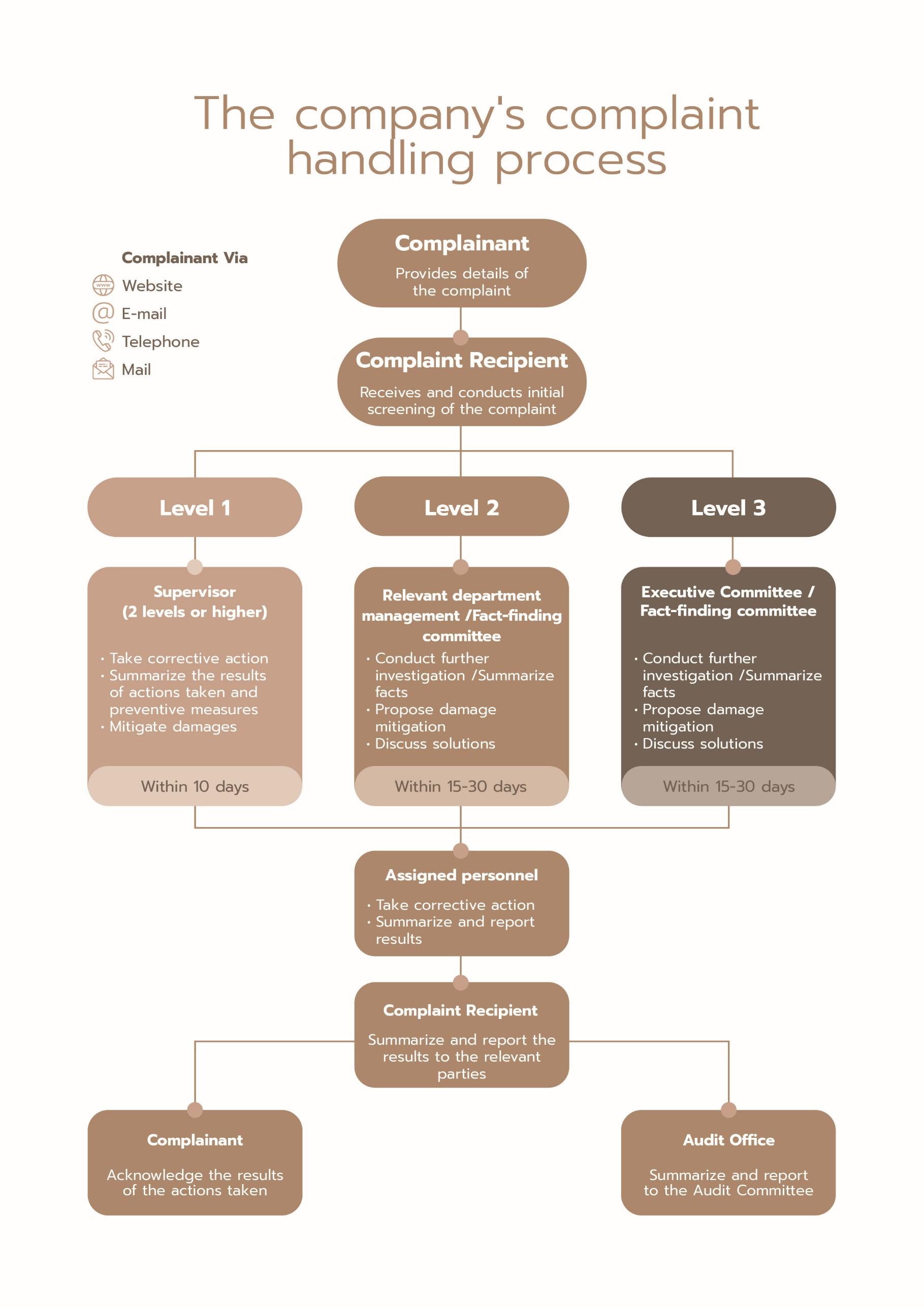
| Whistleblowing and Protection of Whistleblowers | The Board of Directors provides opportunities for stakeholders to submit complaints regarding business ethics, corruption, and non-compliance with laws, regulations, or the Company’s Articles of Association through designated reporting channels. Upon receipt of a case, the Company follows a screening process to delegate the matter to relevant departments for investigation and action, in accordance with established policies and procedures. Furthermore, the Company provides protective measures for whistleblowers as specified in the Whistleblowing Policy, which is disclosed on the Company’s website.
| https://www.snpfood.com/storage/download/corporate-policies/20250509-snp-whistle-blowing-policy-en.pdf |
| Preventing the Misuse of Inside Information | The company has established that Directors, including executives as defined by the Securities and Exchange Commission (SEC), as well as their spouses, or those living together as spouses, and their underage children, must not buy, sell, transfer, or accept the transfer of company securities during the 30-day period prior to the disclosure of financial statements to the Stock Exchange of Thailand (SET) and the SEC. They also have the obligation to report under Section 59 within 3 business days from the date of any change in securities holdings to the SEC and must notify the Company Secretary of such changes, as assigned by the Board of Directors. The Company Secretary will send email notifications to Directors and executives to refrain from buying, selling, transferring, or accepting the transfer of company securities for at least 30 days prior to the public disclosure of the financial statements (Blackout Period). The Company Secretary will also collect information on the securities holdings of Directors and executives and report this to the Board of Directors on a quarterly basis, as well as disclose such information in the One Report. Each year, all employees are required to undergo training to review the code of ethics for Directors, executives, and employees, as well as various policies, including the company's anti-corruption policy, through an online system. In 2025, there were no instances where Directors or executives of the company disclosed insider information or sought personal or third-party benefits, whether directly or indirectly. | |
| Prevention of money laundering | The Company acknowledges the importance of laws related to the prevention of money laundering. It has operational guidelines to comply with the Anti-Money Laundering Act B.E. 2542: (1999). The Company's focus is to ensure its personnel protect themselves from being used for any form of money laundering process, as follows: 1. Monitor and provide intelligence to the appropriate authorities if any actions are observed that are not in compliance with the law. 2. Accurately record all financial transactions and facts concerning assets in accordance with the requirements of both domestic and international laws. | |
| Giving or receiving gifts, entertainment, or business entertainment | Directors, Executives and Employees of the Company are strictly prohibited from offering, giving, or promising to provide gifts, tokens of appreciation, or any other benefits, whether in the form of cash or items of value, to customers or business partners for the purpose of influencing negotiations, bargaining, reaching conclusions, or ensuring contractual compliance. An exception is made for gifts and tokens given in accordance with established traditions and customs, provided they are offered transparently and duly recorded with the Company. Such gifts must be of an appropriate value, not exceeding 2,000 Baht. Furthermore, Directors, Executives and Employees must not offer, give, or promise to provide financial assistance to any customer or business partner for any purposes whatsoever. Similarly, Directors, Executives and Employees must not accept or agree to accept gifts, tokens, or any other benefits from customers or business partners intended to influence negotiations, bargaining, or the fulfillment of contracts. Acceptance is permitted only when such tokens are presented to the Company in accordance with traditional customs, are handled transparently, and are officially recorded. These accepted items must have an appropriate value not exceeding 2,000 Baht. Regarding business entertainment, Directors, Executives and Employees must not offer or arrange hospitality with the intent of gaining an advantage in negotiations or securing specific outcomes. However, providing hospitality to customers or business partners is permissible when it is conducted in accordance with good traditional customs and business etiquette | |
| Compliance with laws, rules and regulations | The Company operates by prioritizing compliance with all relevant laws, regulations, and good corporate governance as follows: 1. Study and understand the laws, regulations, orders, and announcements related to their duties and responsibilities and strictly adhere to them. 2. Respect the culture and traditions of each locality where the Company operates. 3. To abstain from providing support or assistance to any act that constitutes evasion or violation of compliance with laws, regulations, rules, orders, and announcements. 4. If any act is found to be in violation of or non-compliant with the laws, regulations, rules, orders, and announcements of the Company, action shall be taken in accordance with the policy on complaints and whistleblowing policy channels. | |
| Use and maintenance of data and assets | Directors, executives, and employees at all levels have the duty and responsibility to safeguard and utilize the Company’s assets for the maximum benefit of the Company and recognize the importance of protecting internal or material information that could affect the Company’s operations and the price of its securities, regardless of whether such information is explicitly marked as confidential: or not. It is strictly prohibited to misuse or improperly utilize such information, which is acquired through employment or assignment, for unauthorized gain or to create an unfair advantage. The Company maintains secure and appropriate systems and measures for controlling and storing all data and electronic information to prevent unauthorized access. Upon instruction from the Company, employees are required to return Company information and/or take all necessary measures, such as destroying documents or deleting electronic data, to ensure the continued confidential status of the information. | |
| Anti-competitive | The Company maintains a policy to support and promote free and fair commercial competition in accordance with business ethics and relevant laws. The Company does not have a policy to engage in competition through any methods aimed at acquiring competitors' information illegally or unethically. Furthermore, the Company is committed to conducting business under the principles of integrity and fairness to foster a competitive environment that provides sustainable benefits to all parties in the market. | |
| Cyber security | The Company has policies and security systems for data and information technology to prevent and mitigate the risks of cyber threats. It also has policies and systems to prevent the leakage or unauthorized use of personal data belonging to the data subject, or the misuse of any data. Directors must collect, gather, use, and process personal data solely for the lawful operational purposes of the Company. They must control and ensure that the collection, gathering, use, and processing of personal data are conducted in strict accordance with the Personal Data Protection Act B.E. 2562 (2019) and relevant governing laws. Furthermore, they must strictly comply with the Company's procedures regarding requests for consent from data subjects and the procedures concerning the use, processing, and disclosure of personal data | |
| Environmental management | The Company prioritizes the reduction of environmental impacts that may arise from its operations, as well as the preservation of ecosystems and the valuable use of natural resources. Therefore, the Company is committed to strict compliance with all environmental laws and regulations, while actively supporting and participating in the Company’s various environmental initiatives. Furthermore, the Company integrates energy conservation innovations and eco-friendly practices into its business operations to promote long-term sustainability. | |
| Human rights | The Company upholds the fair, equal, and non-discriminatory treatment of all stakeholders. It has therefore promoted labor practices that align with international standards and is committed to expanding the scope of its operations in respecting human rights and the labor practices for its employees. This includes conducting comprehensive human rights risk assessments in accordance with international guidelines, which encompass the United Nations' Universal Declaration of Human Rights, the United Nations Global Compact, the United Nations Guiding Principles on Business and Human Rights, the International Labor Organization's Declaration on Fundamental Principles and Rights at Work, and the labor laws of each country in which the Company operates, with the following practices: 1. To conduct oneself and treat others with respect, equality, and mutual honor, fostering unity and avoiding factionalism, without discrimination based on differences in ethnicity, nationality, religion, gender, age, skin color, place of origin, education, language, social status, pregnancy, marital status, sexual orientation, political opinion, disability, membership in any association, or any other matter protected by law. 2. To not use unlawful child labor, forced labor, or labor derived from human trafficking. This includes refraining from punishments that inflict physical or mental cruelty upon employees, whether through methods of confinement, detention, harassment, coercion, intimidation, abuse, or any form of violence, and to strictly comply with all relevant labor laws. 3. To treat all employees fairly in matters such as recruitment, compensation, working hours and holidays, work assignments, performance evaluations, training and development, career advancement planning, and others, without discrimination. 4. To not engage in or support any activities that violate human rights, and to provide knowledge and understanding of human rights principles to Directors, executives, and employees. | |
| Occupational health and safety | The Company places importance on operating with consideration for safety, occupational health, and a positive working environment. It prioritizes safety with the same level of importance as other business operations, with a commitment to developing occupational health and safety in the workplace to be prepared to respond promptly to various situations that may arise rapidly. 1. To provide a safe working environment with basic facilities, such as clean and sanitary drinking water, first aid equipment, fire escapes, restrooms, and necessary safety equipment as stipulated by law. 2. To arrange for communication and public relations to create knowledge and understanding of safety and health issues among employees, to require that employees undergo training on safety and hygiene in the workplace, to promote good health for employees, and to establish appropriate working hours. 3. To promote and instill an awareness of safety, occupational health, and the environment as an integral part of the daily lives of employees. |
Promoting Compliance with the Code of Conduct
Promotes Compliance by Directors, Executives and Employees
Yes
Description
The Company provides continuous communication and training for its personnel via the 'S&P Learning Center' online platform. The curriculum includes mandatory core courses for all employees, specialized interest courses, and position-specific training. To receive a certificate, every employee must complete and pass the assessments for the following mandatory core courses: Code of Conduct for Directors, Executives, and Employees; Personal Data Protection; Cybersecurity; Occupational Health and Safety; and Waste Segregation. In 2025, the participation and passing rate for the Code of Conduct course reached 99%. Additionally, the Company produces educational media for employees on various topics, such as Anti-Corruption, Gift and Benefit Guidelines, Financial Saving for Employees, Supplier Selection, Whistleblowing Procedures, and Insider Trading Prevention.
Regarding business partners, the 'Code of Conduct for Suppliers' is integrated into the criteria for supplier selection, contracting, and financial transactions. Business partners are required to agree to comply with this Code and submit a signed acknowledgment to the Company.
Anti-Corruption Networks & Projects
Joined or Declared Intent to Join Anti-Corruption Networks
Yes
Networks & Projects Joined
| Network / Project | CAC Certified |
|---|---|
| Thai Private Sector Collective Action Against Corruption: CAC | Y |
| United Nations Global Compact (UNGC) | |
| Participation of anti-Corruption networks and initiatives |
Material Changes & Developments in CG
Reviewed the CG Policy or Board Charter in the Past Year
Yes
Material Changes or Developments in the Past Year
Yes
Policy Review — Description
In 2025, the company reviewed and revised its corporate governance practices as follows:
1. The Corporate Governance and Sustainability Committee considered and approved amendments to the Code of Conduct for Business Partners and the Code of Conduct for directors, executives, and employees, with a greater emphasis on detailed operational guidelines and follow-up for each topic.
2. The Board of Directors considered and approved the revision of the Good Corporate Governance Principles, elevating the policy to be appropriate, modern, and in line with relevant principles, practices, and standards, to provide clear and effective guidelines for directors, executives, and employees of the company.
3. The Board of Directors considered and approved the revision of the Anti-Corruption Policy to reaffirm the company's commitment to combating all forms of corruption, and to encourage employees at all levels, including business partners and stakeholders, to uphold ethical standards in their work. The key substance of the revised policy includes the definition of corruption, which covers bribery and the giving of gifts, hospitality, and other benefits. Business operations, product withdrawals, and other expenses must comply with the criteria set by the company.
4. Reviewed the charters of the Board of Directors and all sub-committees, defining their roles and responsibilities to align with best current practices
The Board of Directors mandates regular monitoring of compliance with the Good Corporate Governance Principles, Business Code of Conduct, and best practices. Furthermore, various policies have been published on the company's website (www.snpfood.com).
Implements the CG Code for Listed Companies
No
CG Code — Description
The company considers adopting the principles of good corporate governance for listed companies, or the Corporate Governance Code (CG Code), issued by the Securities and Exchange Commission, and adapting them to suit the company's circumstances. For the year 2025, the company has not yet implemented certain issues, which have been recorded as part of the Board of Directors' resolutions for annual review, as follows:
1. The Chairman of the Board is not an independent director.
2. The Board of Directors comprises less than a 50% proportion of Independent Directors.
The company has established a board structure with the number and qualifications of Independent Directors in accordance with the criteria of the Securities and Exchange Commission and the Stock Exchange of Thailand. It also ensures that independent directors can work effectively with the entire Board and express their opinions independently. The company will consider appropriate implementation guidelines going forward.
3. The company has independent directors who have served continuously for more than 9 years.
The Board of Directors has considered and determined that the aforementioned independent directors possess full qualifications, can provide independent opinions, and comply with relevant criteria. The Board will present the reasons for requesting the shareholders' meeting to consider and approve the election of these directors as independent directors.
4. The company has not disclosed the remuneration details of the Chief Executive Officer (CEO).
The company has disclosed the remuneration details of the CEO, who is the top executive, as part of the executive remuneration, and therefore such information has not been disclosed separately.
Other CG Performance & Outcomes
In recognition of its commitment to sustainable business operations throughout the value chain, the company received the following awards:
1. An AAA rating in the SET ESG Rating 2025 from the Stock Exchange of Thailand.
2. An "Excellent" rating (5 stars) corporate governance survey score from the Thai Listed Companies Corporate Governance Survey Project 2025 (CGR) organized by the Thai Institute of Directors Association.
3. A score of 100 (Excellent) from the Annual General Meeting Quality Assessment Project (AGM Checklist) organized by the Thai Investors Association.