

Board Performance · 2025
In this section13 topics
- Prevention of Conflicts of Interest3 items
- Prevention of the Use of Inside Information3 items
- Anti-Corruption5 items
- Whistleblowing4 items
- Selection of Directors & Chief Executives7 items
- Selection of Independent Directors2 items
- Director Development1 item
- Evaluation of Board & Subcommittee Performance3 items
- Subcommittees1 item
- Meeting Attendance & Remuneration4 items
- Supervision of Subsidiaries & Associated Companies4 items
- Audit Committee Duty Performance1 item
- Executive Committee Duty Performance1 item
Prevention of Conflicts of Interest
Has the Company Acted to Prevent Conflicts of Interest?
Yes
Operations in the Past Year
The Board of Directors has established a written policy on the prevention of conflicts of interest to avoid situations that could lead to a conflict between personal interests and the Company's interests. The policy clearly defines the procedures for the approval of related-party transactions or those involving persons who may have a conflict of interest, serving as a guideline for directors and executives to follow. The policy dictates that all transactions must be conducted under normal business conditions, prioritizing the best interests of the Company and its shareholders, and strictly avoiding any actions that create a conflict of interest.
The Company requires that directors and executives who have a vested interest or are related to a transaction under consideration must notify the Company of their relationship or connection and that of related persons prior to the Board of Directors' meeting agenda consideration, and a director with a vested interest in any agenda item shall not be entitled to vote on that particular item. Furthermore, a policy and procedure have been established to prevent executives and related persons from using the Company's inside information for personal gain.
The Board of Directors oversees the submission of conflict of interest reports by directors and senior executives to the Company Secretary annually in December, to ensure the data is up-to-date and aligns with the principles of good corporate governance.
For the year 2025, no breaches of the rules governing related-party transactions or actions violating the conflict of interest policy were found.
Number of Conflict-of-Interest Cases
| Metric | Current Year | Previous Year | Two Years Ago |
|---|---|---|---|
| Total number of cases or issues related to conflicts of interest (cases) | 0 | 0 | 0 |
Prevention of the Use of Inside Information
Has the Company Acted to Prevent the Use of Inside Information?
Yes
Operations in the Past Year
The Company has established a written policy on the prevention of the use of inside information, informing the guidelines to all directors, executives, and employees to adhere to, in order to ensure equality and fairness to all shareholders and to prevent involved directors and executives from trading securities and seeking undue benefit for themselves or others, as follows:
The Company requires all directors, including the company's executives as defined by the Securities and Exchange Commission (SEC), as well as their spouses or live and cohabit as husband and wife, and minor children, to refrain from buying, selling, transferring, or receiving transfers of company securities within a 30-day period prior to the disclosure of financial statements to the Stock Exchange of Thailand (SET) and the SEC. Additionally, they are obliged to report under Section 59 within 3 business days from the date of change in securities holding to the SEC and must notify the person designated by the Board of Directors of such change. The Board of Directors has assigned the Company Secretary to be responsible for this matter. The Company Secretary will email notifications to the directors and executives, advising them to abstain from buying, selling, transferring, or receiving transfers of company securities at least 30 days in advance of the financial statements' public disclosure. The Company Secretary is responsible for compiling information on the securities holdings of directors and executives, including their spouses or cohabitants and minor children, to report for the Board of Directors' acknowledgment quarterly and to disclose in the annual report.
In 2025, no directors or executives were found to engage in securities trading during the blackout period specified by S&P, nor did they disclose confidential information, and there were no violations of inside information usage policies or measures
Number of Inside-Information Cases
| Metric | Current Year | Previous Year | Two Years Ago |
|---|---|---|---|
| Total number of cases or issues related to the use of inside information to seek benefits (cases) | 0 | 0 | 0 |
Anti-Corruption
Has the Company Acted on Anti-Corruption?
Yes
Operations in the Past Year
Summary of anti-corruption operations of S&P Syndicate Public Company Limited for the year 2025 are as follows:
1. Review of Suitability of Anti-Corruption Matters
- The Company regularly reviews and updates its "Anti-Corruption Policy" to align with the organizational context, laws, and international best practices.
- The third revision of the updated policy was announced on August 15, 2025, to reaffirm the commitment to opposing all forms of corruption.
2. Participation in Anti-Corruption Projects
- The Company was certified and upgraded its status to "CAC Change Agent" by the Thai Private Sector Collective Action Against Corruption (CAC) on July 7, 2025, demonstrating its success in expanding its transparent business network to supply chain partners.
- A new "Anti-Corruption Oversight and Prevention Working Group" was appointed (effective September 15, 2025) to systematically establish guidelines and preventative measures in line with good corporate governance principles.
- The Working Group is responsible for planning and organizing continuous Anti-Corruption campaigns within the organization.
3. Corruption Risk Assessment and Identification
- The Company conducted its annual corruption risk assessment for 2025, identifying key issues such as the illegal hiring of foreign labor, bribery of customs officials, and construction permit approvals.
- The Company analyzed the probability of occurrence, impact, and established internal control systems to mitigate the risks to a low level.
4. Communication and Training for Employees on Policies and Practices
- Policies are communicated through various channels such as the Company's website, annual report, and internal web links to ensure all stakeholders are informed.
- Training is provided to all employees through an E-Learning system, especially new employees, and specialized training is provided on conflicts of interest.
5. Monitoring and Evaluation of Policy Compliance
- The Risk Management Committee is responsible for monitoring and reporting the effectiveness of anti-corruption measures to the Board of Directors on a quarterly basis.
- Performance results regarding anti-corruption are regularly reported to the Board.
6. Process Completeness and Adequacy Review
- The Internal Audit Office is responsible for regularly auditing the internal control system and various operational processes.
- The Audit Committee oversees the risk assessment and audit results closely.
- The result of the anti-corruption prevention and detection assessment in 2025 scored 111 out of 120 (equivalent to 92.5%), which is an increase from the previous year.
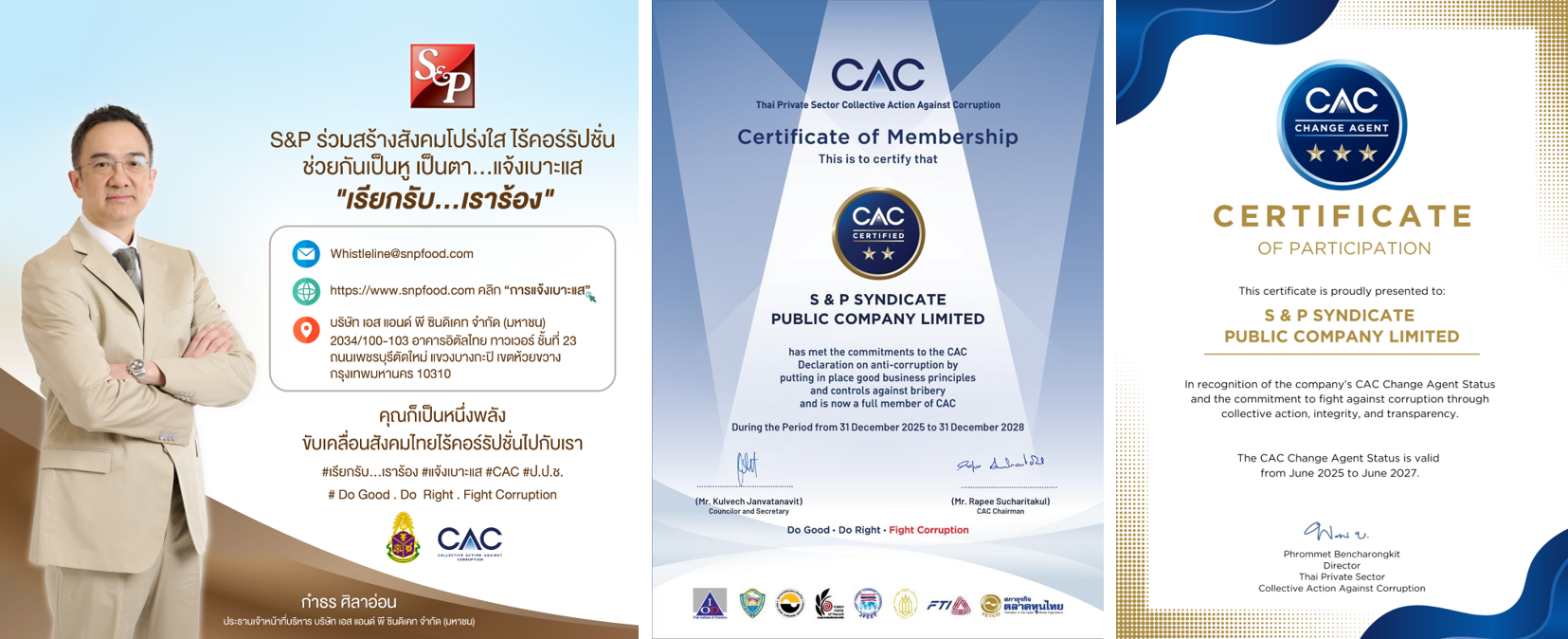
Form of Anti-Corruption Operations
| Operation |
|---|
| Review of appropriateness in anti-corruption |
| The participation in anti-corruption projects |
| Assessment and identification of corruption risk |
| Communication and training for employees on anti-corruption policy and guidelines |
| The monitoring of the evaluation of compliance with the anti- corruption policy |
| Review of the completeness and adequacy of the process by the Audit Committee or auditor |
Number of Corruption Cases
| Metric | Current Year | Previous Year | Two Years Ago |
|---|---|---|---|
| Total number of cases or issues related to corruption (cases) | 1 | 1 | 0 |
Details of Corruption Cases
| Status | Period Type | Start of Period | End of Period | Details of the Case or Issue | Investigation Results | Corrective Actions |
|---|---|---|---|---|---|---|
| Incident no longer subject to action | Within (month/year) | 2025-09 | 2025-09 | Employee forging documents and embezzlement. | The inspection of information in the system, documents, and with relevant parties confirmed the employee's misconduct. | The employee, after investigation, admitted to the misconduct. The Company proceeded according to its regulations by termination of employment and legal action. |
Whistleblowing
Has the Company Implemented Whistleblowing Procedures?
Yes
Operations in the Past Year
The Board of Directors continues to focus on corporate governance in accordance with the principles of business ethics, conducting business with integrity and transparency. In 2025, the Company focused on building understanding and trust among employees and all stakeholders to ensure that whistleblowing is a safe process that genuinely protects the whistleblowers. Complaints and tips can be reported through the following channels:
Email: whistleline@snpfood.com
Post: Internal Audit Department, S&P Syndicate Public Company Limited
2034/100-103 Ital-Thai Tower, 23rd Floor, New Phetchaburi Road,
Bangkapi Subdistrict, Huai Khwang District, Bangkok 10310
Website: www.snpfood.com (Corporate Governance > Whistleblowing)
Number of Whistleblowing Cases
| Metric | Current Year | Previous Year | Two Years Ago |
|---|---|---|---|
| Total number of cases or issues received through whistleblowing channels (cases) | 7 | 3 | 3 |
Details of Whistleblowing Cases
| Status | Period Type | Start of Period | End of Period | Details of the Case or Issue | Investigation Results | Corrective Actions | Case or Issue |
|---|---|---|---|---|---|---|---|
| Incident no longer subject to action | Within (month/year) | 2025-02 | 2025-02 | Inappropriate communication by a supervisor toward a subordinate. | Inquiries with other co-workers confirmed the inappropriate communication by the supervisor toward the subordinate. | The individual complained against was questioned about the incident and admitted to the inappropriate communication. The supervisor then verbally counselled and warned the individual.
| 3190 · Description: Compliance with laws, regulations, and rules |
| Incident no longer subject to action | Within (month/year) | 2025-04 | 2025-04 | Employer calculated employee's salary incorrectly and failed to follow up on the correction. | An examination of the system and documents confirmed that the supervisor had incorrectly calculated the employee's salary. | Inquiry and review of the operating procedures were conducted, a written warning was issued, and the disbursement of the deficient amount to the employee was processed. | 3190 · Description: Compliance with laws, regulations, and rules |
| Incident no longer subject to action | Within (month/year) | 2025-04 | 2025-04 | Supervisor violating a subordinate's personal rights.... | An investigation of the evidence received from the complainant and corroborating testimony revealed a genuine act of violating a subordinate's personal rights. | Management negotiated with the supervisor, who requested to resign to show responsibility for the incident. | 3197 · Description: Human rights |
| Incident no longer subject to action | Within (month/year) | 2025-07 | 2025-07 | The supervisor frequently arrived late for work and failed to record the actual working time on multiple occasions. | An examination of the time recording system and interviews with relevant personnel confirmed that the supervisor had failed to record the actual working time multiple times. | The supervisor questioned the individual complained against, who admitted to genuinely violating the regulations, and was thus verbally warned and placed on disciplinary probation for any recurrence. | 3190 · Description: Compliance with laws, regulations, and rules |
| Incident no longer subject to action | Within (month/year) | 2025-07 | 2025-07 | An employee forged a supervisor's signature on an internal company document. | The supervisor of the employee complained against examined the document and questioned the employee, who admitted to the act. | The supervisor issued a written warning and placed the employee on disciplinary probation.
| 3190 · Description: Compliance with laws, regulations, and rules |
| Incident no longer subject to action | Within (month/year) | 2025-09 | 2025-09 | Employee issued false tax invoices and embezzled assets. | An inspection of the sales system data, tax invoice documents, and relevant parties confirmed the employee's misconduct. | The employee admitted to the misconduct following the investigation. The Company acted in accordance with its regulations by terminating employment and pursuing legal action. | 3189 · Description: Anti-corruption |
| Incident no longer subject to action | Within (month/year) | 2025-11 | 2025-11 | Employee acted inappropriately, violating the company's code of ethics. | An investigation was conducted, and the employee complained against was questioned. It was found that the complaint was submitted to the system by the employee's ex-husband with the intent to harass her. | A review of the company's policy and code of ethics was conducted to inform and prevent impacts on job performance. | 3190 · Description: Compliance with laws, regulations, and rules |
Selection of Directors & Chief Executives
Selection, Development & Evaluation — Introduction
The Board of Directors has assigned the Nomination and Remuneration Committee to establish criteria for selecting directors. As part of this process, the committee has prepared a Board Skill Matrix outlining the overall composition and qualifications of the Board of Directors and presented it to the Board for consideration. The selection process takes into account the nature of the business, strategic direction, and the necessary skills that may be lacking on the Board. It also emphasizes Board diversity in terms of professional expertise, specialized knowledge, experience, competencies, and gender. These factors are considered in identifying suitable candidates. Additionally, at least one non-executive director must have relevant experience in the company's business. The diversity of the Board is reviewed annually, along with an assessment of the current Board’s performance. These evaluations help refine the Board's structure and serve as key criteria in the selection process to ensure that the Board consists of qualified individuals aligned with the company’s business direction. Furthermore, individuals appointed as directors or executives of the company must meet the following qualifications:
Possesses the necessary qualifications and does not have any prohibited characteristics under the Public Limited Companies Act B.E. 2535 (1992) or other relevant laws, as well as the regulations of the Stock Exchange of Thailand, the Securities and Exchange Commission, and the company's articles of association.
Possesses vision, leadership, integrity, and ethics, along with relevant knowledge, expertise, and beneficial experience and understands the nature of the company's business and industry, aligning with the company’s strategy and the Board Skill Matrix.
Demonstrates responsibility and is able to dedicate sufficient time to fully perform their duties as a director of the company. Directors may hold directorships in other entities, provided that it does not hinder their ability to fulfill their duties for the company. To ensure directors can effectively dedicate their time and efforts, each director is limited to holding directorships in no more than five listed companies on the Stock Exchange of Thailand.
In this regard, prior to the Annual General Meeting of Shareholders (AGM), the Company had provided an opportunity for minority shareholders to nominate suitable candidates for election as company directors, propose agenda items, and submit questions in advance for the annual AGM. This was announced via the Stock Exchange of Thailand's website and the Company's website. For the 2025 Annual General Meeting of Shareholders, the Company invited shareholders to nominate suitable candidates for election as directors and propose agenda items from November 8 to December 30, 2024, and to submit questions in advance from March 24 to April 21, 2025. Upon the expiry of the designated period, no shareholder submitted any nominations for directors, proposed agenda items, or questions to the Company.
According to the Public Limited Companies Act B.E. 2535 (1992) and the company's Articles of Association, one-third of the total number of directors must retire by rotation at each Annual General Meeting (AGM) of Shareholders. If the number of directors cannot be evenly divided into three parts, the number closest to one-third shall retire. At the Board of Directors Meeting No. 1/2568, based on the recommendation of the Nomination and Remuneration Committee, a resolution was passed to propose the reappointment of four directors who were due to retire by rotation. The directors in question were: Mr. Kachorndej Raiva, Mrs. Kessuda Raiva, Ms. Cattleya Saengsastra and Mr. Kosin Chantikul these nominations were presented for consideration at the AGM 2025, where shareholders were asked to approve their reappointment for another term. The Board had carefully reviewed the candidates' qualifications, including their knowledge, skills, experience, and contributions to the company's business, as well as their integrity and ethical standards. Additionally, the Board considered the results of their performance evaluations as directors and members of board committees. At the Annual General Meeting of Shareholders held on 22 April 2025, the shareholders approved the reappointment of all four directors for another term.
At the Board of Directors Meeting No. 5/2568 on November 12, 2025, a resolution was passed to appoint Mr. Chaiyapat Paitoon as a director to replace Mr. Thunyachate Ekvetchavit, who resigned as a director of the Company, upon the recommendation of the Nomination and Remuneration Committee. The Committee considered him to be suitably qualified, possessing knowledge, competence, and skills beneficial to the Company's business operations. His term of office shall be for the remainder of Mr. Thunyachate Ekvetchavit's term.
As of 31 December 2025, the Board of Directors consists of 12 members, which is an appropriate number for the company’s business operations. All board members have extensive work experience and have held or currently hold senior executive positions in government agencies and/or the private sector. The majority of the directors have direct experience in the company's industry, as well as expertise in corporate strategic planning, risk management, and governance based on ESG principles.
Directors & Chief Executives — Introduction
The Nomination and Remuneration Committee is responsible for the nomination of directors, which involves considering, selecting, and screening individuals who possess suitable qualifications, knowledge, competence, skills, and experience beneficial to the Company's operations, a deep understanding of the Company's business, and the ability to manage affairs to achieve the objectives and targets set by the Board of Directors. The Committee proposes such candidates to the Board of Directors for consideration and appointment, or for submission for approval at the Shareholders' Meeting in accordance with the Company's Articles of Association, ensuring the process is transparent, fair, and verifiable. Furthermore, the Committee is responsible for nominating the Company's senior executives, including the Chief Executive Officer, preparing the Board Skill Matrix to identify necessary skills currently lacking on the Board, and overseeing the development of the senior executive succession plan.
Succession Plan
The Board of Directors is responsible for the Nomination and Remuneration Committee with developing a succession plan for the CEO and other senior management positions to ensure readiness and continuity in the Company’s operations. The growth of capable executives is supported alongside the Company. This includes setting criteria for knowledge, skills, and experience essential to key positions that significantly impact the Company’s business. Moreover, the Committee conducts assessments to identify strengths, weaknesses, and readiness, particularly for the CEO position, in order to identify suitable candidates for participation in individual development programs to prepare them for business leadership. This initiative aims to support business expansion, organizational restructuring, and retirement replacement.
The Nomination and Remuneration Committee meeting the succession plan for the Chief Executive Officer and senior executives was reviewed. The committee developed training and development programs aimed at enhancing skills across various areas and reported the progress to the Board of Directors.
Are Directors Selected Through the Nomination Committee?
Yes
Are Chief Executives Selected Through the Nomination Committee?
Yes
Number of Directors from Major Shareholders
2
Rights of Minority Shareholders on Director Appointment
1. One shareholder shall have one vote for one share held.
2. Each shareholder may exercise all votes they possess under item 1. to elect a single individual or multiple individuals as directors. In the case of electing multiple individuals, the shareholder shall not split their votes among the candidates, but shall cast their votes for each nominee individually based on the list of proposed individuals.
3. The individuals who receive the highest number of votes, in descending order, shall be elected as directors, up to the number of directors required to be appointed or elected at that meeting. In the event that individuals to be elected in the next sequence have an equal number of votes exceeding the number of directors to be appointed or elected at that meeting, the Chairman shall cast the deciding vote.
Method of Director Appointment
| Method |
|---|
| Method whereby each director requires approval votes more than half of the votes of attending shareholders with voting rights |
Selection of Independent Directors
Criteria for Selecting Independent Directors
The Company has established criteria for independent directors in accordance with the standards of the Securities and Exchange Commission and the Stock Exchange of Thailand, as follows:
1. Holding shares not exceeding 1% of the total voting shares of the Company, subsidiaries, affiliates, and related companies. This includes shares held by related parties of such independent directors.
2. Not being or having been directors involved in management, employees, regular salaried consultants, or controlling persons of the Company, subsidiaries, affiliates, and related companies, unless they have been exempted from such position for at least 2 years.
3. Not being a person who is related by blood or registered according to the law of another director, executive, major shareholder, controlling person, or a person proposed to be a director, executive, or controlling person of the Company or its subsidiaries.
4. Not having or having had a business relationship with the Company, subsidiaries, affiliates, or related companies in a manner possibly interfering with their independent judgment, including not being or having been a shareholder with an interest or a controlling person of individuals with a business relationship with S&P, subsidiaries, affiliates, or related companies, unless exempted for at least 2 years.
5. Not being or having been an auditor of the Company, subsidiaries, affiliates, or related companies, and not being a shareholder with an interest or a controlling person of the office of the auditor, which has auditors of the Company, subsidiaries, affiliates, or related companies, unless exempted for at least 2 years.
6. Not being or having been a professional service provider, including providing legal or financial consulting services, which received fees exceeding 2 million baht per year from the Company, subsidiaries, affiliates, or related companies, and not being a shareholder with an interest or a controlling person of such professional service provider, unless exempted for at least 2 years.
7. Not being a director appointed to represent the directors of the Company, major shareholders, or shareholders who are related to major shareholders.
8. Not engaging in similar business activities and competing directly with the Company or the subsidiaries, not being a shareholder with an interest in a partnership, or being directors involved in management, employees, regular salaried consultants, or holding shares exceeding 1% of the total voting shares of another company engaged in similar business activities and competing directly with S&P or the subsidiaries.
9. Having no other characteristics that would prevent providing independent opinions on the Company’s operations.
Furthermore, the Board has the policy allowing independent directors to serve consecutively for up to 9 years from the date of their initial appointment as independent directors. Upon completion of this term, the board may propose the reappointment of such independent directors for consideration and election at the next ordinary shareholders’ meeting. The board must consider the independence in carrying out duties, performance, as well as reasons and necessity for reappointment.
Did Any Independent Director Have a Business or Professional Relationship?
No
Director Development
Director Development — Introduction
The Company places great importance on continuously promoting the knowledge development of Board members and executives. We support the Board members’ participation in training programs related to their roles and responsibilities organized by the Institute of Directors Association (IOD). Currently, 11 out of 12 Board members, accounting for 91.67%, have completed training programs such as the Director Certification Program (DCP) and/or the Director Accreditation Program (DAP) with the IOD.
Evaluation of Board & Subcommittee Performance
Criteria for Evaluating Board Performance
The Nomination and Remuneration Committee of the Company ensures that there is an evaluation of the Board of Directors’ performance. They utilize the evaluation form provided by the Stock Exchange of Thailand and tailor it to suit the characteristics and structure of the Board of Directors. This evaluation framework serves as a guideline for assessing the performance of the Board of Directors and the results are used to consider the suitability of individuals and improve the Board’s operation. The company secretary is responsible for sending the evaluation form to each director for assessment. The evaluation includes assessing the performance of the entire board as well as individual directors. The evaluation of the board's performance includes the following evaluation topics:
Evaluation Criteria for the entire Board of Directors:
1. Board Structure and Qualifications
2. Roles, Duties, and Responsibilities of the Board
3. Board Meetings
4. Board’s Performance of Duties
5. Relationship with Management
6. Self-development of the Board and Management Development
Evaluation Criteria for Individual Directors:
1. Board Structure and Qualifications
2. Board Meetings
3. Roles, Duties, and Responsibilities of Directors
Sub-Committees
The Board of Directors has established sub-committees, including the Audit Committee, Risk Management Committee, Nomination and Remuneration Committee, and Corporate Governance and Sustainability Development Committee. These sub-committees conduct self-assessments individually, referencing the evaluation forms provided by the Stock Exchange of Thailand. The assessment criteria include sub-committee structure and qualifications, meeting conduct, roles, duties, and responsibilities.
Evaluation of Board Performance in the Past Year
In 2025, the Nomination and Remuneration Committee presented the results of the evaluation of the Board of Directors, both as a group and individually. This includes the evaluation results of every sub-committee reported to the Board of Directors at the meeting No. 1/2026 on 26 February 2026. The evaluation results of the Board of Directors and sub-committees were at an excellent level.
Evaluation Results
| Evaluated Body | Group — Carried Out? | Group — Grade / Average Score | Group — Grade / Full Score | Individual (Self-Assessment) — Carried Out? | Individual (Self-Assessment) — Grade / Average Score | Individual (Self-Assessment) — Grade / Full Score | Cross (Assessing Other Directors) — Carried Out? |
|---|---|---|---|---|---|---|---|
| Board Of Director | Y | 97.93 | 100.00 | Y | 96.93 | 100.00 | N |
| Audit Committee | Y | 94.84 | 100.00 | N | N | ||
| Executive Committee | Y | 97.35 | 100.00 | N | N | ||
| Other Subcommittee | Y | 96.48 | 100.00 | N | N | ||
| Other Subcommittee | Y | 93.06 | 100.00 | N | N | ||
| Other Subcommittee | Y | 100.00 | 100.00 | N | N |
Subcommittees
Subcommittees
| Results of the Subcommittee's Duty Performance |
|---|
In 2025, the Risk Management Committee held a total of 2 meetings, with all directors attending, forming a full quorum at every meeting. The Chairman of the Risk Management Committee reported the meeting outcomes to the Board of Directors for their acknowledgment. Key details are as follows: 1. The Committee reviewed the policy for 2025 to ensure the Company maintains an appropriate risk management framework that is responsive to changes in the business environment, and effectively addresses key risk factors. This aims to enhance business continuity and support the achievement of the Company's long-term strategic objectives. 2. The Committee reviewed and approved the Company's Risk Appetite. It provided recommendations on comprehensive risk management approaches covering strategic, operational, financial, and compliance risks. Furthermore, the Committee oversaw the management's establishment of effective and appropriate risk managedment systems and processes, ensuring continuous monitoring and evaluation to support the achievement of the Company's long-term goals and sustainability. 3. The Committee considered the risk management structure, guidelines and mitigation measures, as well as the Company's risk management operational plan. This includes acknowledging the results of risk assessment and residual risk management to ensure that the risk management system is adequate, appropriate, and effective in addressing significant risk factors and continuously supporting business operations to achieve established goals. 4. The Committee oversaw and supported the Company's risk management to achieve its defined objectives and goals, while providing recommendations on prevention and risk mitigation to maintain eisk within acceptable levels. Furthermore, the Committee continuously monitored the progress of operational plans to mitigate risks, to ensure that risk management remains appropriate, aligned with changing business conditions, and effectively supports the Company's operations. 5. The Committee reviewed the Risk Management Committee Charter to ensure its appropriateness and alignment with good corporate governance principles, and to serve as a guideline for the Risk Management Committee's operations. The Risk Management Committee is committed to developing and elevating the Company’s risk management processes and policy to remain modern and appropriate for the changing business environment. This ensures effective risks management, covering both Key Risks and Emerging Risks, while maintaining risk levels within the Company’s Risk Appetit. In 2025, the Risk Management Committee fully performed its roles, duties, and responsibilities as stipulated in its charter, in accordance with good corporate governance principles. These efforts aim to support the creation of value and sustainability for the organization in the long term. |
In 2025, the Nomination and Remuneration Committee held a total of 2 meetings were held, with all directors attending every meeting. The results of these proceedings were reported to the Board of Directors, with key matters summarized as follows: : 1. The Committee considered the suitability of individuals to be proposed for appointment as directors in place of those retiring by rotation at the Annual General Meeting of Shareholders 2025, held on April 22, 2025. The Company had provided an opportunity for shareholders to nominate candidates for director positions, in accordance to the specified criteria between November 8 and December 30, 2024. Upon the expiration of this period, no shareholders nominated any individuals for directorship. Therefore, the Nomination and Remuneration Committee considered proposing the re-appointment of the retiring directors, namely Mr. Kachorndej Raiva, Mrs. Kessuda Raiva, Ms. Cattleya Saengsastra, and Mr. Kosin Chantikul, for another term as company directors. This decision was based on their knowledge, abilities, and experience aligning with the Company's business strategies, and their full qualifications without any prohibited characteristics under relevant laws and regulations. 2. The Committee considered the appointment of a director to replace a resigning director. After carefully considering the qualifications, educational background, as well as work experience and expertise, it was determined that Mr. Chaiyapat Paitoon possesses all qualifications as stipulated by law and the Company's regulations. Furthermore, his knowledge, abilities, and experience beneficial to the Company's business operations. Therefore, it was resolved to propose the appointment of Mr. Chaiyapat Paitoon as a Company Director to fill the vacant position, effective from November 13, 2025, onwards, and to serve for the remainder of Mr. Thunyachate Ekvetchavit's term. 3. The Committee arranged for the performance evaluation of the Board of Directors, individual self-assessment, sub-committees, as well as the Chief Executive Officer and executives. The evaluation results were reported to the Board of Directors to be used as a basis for enhancing the operational efficiency of both the directors and sub-committees. These results are disclosed in the 2025 Annual Report (Form 56-1 One Report). 4. The Committee considered the remuneration for the Board of Directors and sub-committees, including monthly remuneration, meeting allowances, and gratuities, for submission to the Board of Directors and subsequently to the Annual General Meeting of Shareholders for consideration. 5. The Committee considered and approved the remuneration for the Chief Executive Officer and senior executives, based on their individual performance evaluations, including the achievement of defined strategic and business targets. Furthermore, the Committee reviewed and approved the performance evaluation criteria, processes, and the annual remuneration structure for senior executives to ensure their appropriateness and alignment with the Company's performance. Simultaneously, the Committee approved the annual budget for employee salary adjustments and bonuses, and acknowledged the results of the Employee Engagement Survey. This data serves as a vital foundation for the continuous development of the Company's human resources policies and personnel management. 6. The Committee regularly reviewed the Succession Plan for senior executives to ensure continuity in management and to manage risks that may arise from the loss of personnel in key positions within the Company. Progress on the implementation of this plan has been continuously monitored and reported to the Board of Directors' meetings on an ongoing basis to ensure that the Company maintains human resource readiness for long-term business operations. 7. The Committee reviewed and revised the charter of the Nomination and Remuneration Committee to remain current and effective. The Nomination and Remuneration Committee has performed its duties with the responsibilities stipulated in its charter, with prudence and transparency, thereby building confidence among shareholders and all stakeholders. |
In 2025, the Corporate Governance and Sustainability Committee held a total of 3 meetings, with all directors attending, thus forming a quorum for every meeting. The key aspects of their duties can be summarized as follows: 1. The Committee reviewed and enhanced the Company's Good Corporate Governance Policy to ensure it remains modern, appropriate for the business context, and consistent with changes in relevant laws, regulations, and corporate governance practices. updated policy has been published on the Company’s website to allow stakeholders transparent and comprehensive access to information. 2. The Committee reviewed, and revised the Business Code of Conduct for business partners, as well as the Code of Conduct for directors, executives, and employees. These updates ensure the codes are comprehensive, current and emcompass evolving regulatory requirements while aligning with relevant international practices and standards. This is to elevate the standards of transparent, ethical, and responsible business operations towards all stakeholders. 3. The Committee reviewed and approve the Materiality Topics for the year 2025, which were identified through a systematic analysis and prioritization process. This included workshops with the Company's executives and sustainability working group, taking into account the impact on stakeholders and the Company's business direction. These topics serve as the framework for defining annual sustainability strategies, goals, and operational plans, ensuring alignment with the long-term sustainable organizational development roadmap. 4. The Committee regularly acknowledged and monitored the progress of the Company's sustainability initiatives, including the results of comprehensive human rights assessments. This oversight ensures that business operations are conducted responsibly, transparently, and in accordance with good corporate governance principles, while effectively managing potential risks and impacts appropriately. 5. The Committee established the Company's environmental operational plan to support Thailand's achievement of its Net Zero goal, targeting zero net greenhouse gas emissions by 2050. This plan provides a framework for setting concrete strategies, mitigation measures, and action plans aimed for greenhouse gas reduction. These efforts ensure that the Company’s operations are aligned with sustainable development approaches and the long-term transition to a low-carbon economy. 6. The Committee supports and promotes sustainable development activities, covering community development and community relations projects, capacity building and collaboration projects with business partners. This also covers various social projects designed to create value for stakeholders and society as a whole, fostering the Company's long-term sustainable growth. 7. The Committee established policies, monitored performance, and provided recommendations regarding respect for human rights, including the management of occupational health and safety risks. These efforts ensure that business operations are conducted responsibly and in accordance with good corporate governance principles. Furthermore, the Corporate Governance and Sustainability Committee resolved to appoint Mr. Teeranun Srihong, in his capacity as Chairman of the Committee, to oversee and monitor the operations concerning these matters, to ensure appropriate and continuous effective governance. 8. The Committee reviewed and updated the Charter of the Corporate Governance and Sustainability Committee to ensure its ongoing relevance. In 2025, the Committee fully performed its duties and responsibilities as stipulated in its charter. The Committee remained committed to operating with accountability towards all stakeholders, while promoting the creation of balance across economic, social, and environmental dimensions under the principles of good corporate governance, to support stable and sustainable business growth. |
Meeting Attendance & Remuneration
Meeting Attendance — Introduction
The Board of Directors has scheduled at least six meetings per year. The Company Secretary has pre-arranged the Board meeting schedule for the year 2025 and informed all directors at the end of 2024 to allow them to allocate their time and plan to attend all meetings. The meetings are scheduled within 45 days for quarterly financial statements and within two months for the annual financial statements. Additionally, meetings are scheduled to review the company’s vision, mission, business strategies and other significant matters requiring board approval. For each meeting, the Company Secretary will send a notice of the meeting along with supporting documents to the directors at least seven days in advance for the Board to review before the meeting.
A quorum for the Board of Directors meeting requires at least half of the total number of directors to be present. During the meetings, the Chairman allows all directors to freely and openly express their opinions. Adequate time is allocated for discussions on significant issues. If a director has a conflict of interest regarding a matter under consideration, they will not participate in the discussion or vote on that particular agenda item.
Resolutions at the Board of Directors meetings are passed by a majority vote, with each director having one vote. However, a director with a conflict of interest in a particular matter is not entitled to vote on that matter. At the time of voting, at least two-thirds of the total number of directors must be present. The Company Secretary accurately records the meeting minutes, ensuring that all director opinions are clearly documented. The minutes are finalized within 14 days after the meeting and securely stored at the company’s headquarters for directors and relevant parties to review.
In 2025, the Board of Directors held a total of seven meetings, comprising six scheduled annual meetings and one extraordinary meeting are scheduled as follows:
Meeting No. 1/2025 – 26 February 2025
Meeting No. 2/2025 – 22 April 2025
3. Meeting No. 3/2025 – 14 May 2025
4. Meeting No. 4/2025 – 13 August 2025
5. Meeting No. 5/2025 – 12 November 2025
6. Meeting No. 6/2025 – 11 December 2025
7. Meeting No. 7/2025 - 23 April 2025. Extraordinary Board of Directors Meeting to Determine the Company's Short-Term and Long-Term Business Strategies.
These were conducted in both online and physical formats, allowing directors to attend in their preferred mode. In addition to these meetings, Ms. Sophavadee Uttamobol, the Lead Independent Director, convened a meeting of Non-Executive Directors (NEDs) once on 11 December 2025. This meeting provided an opportunity for non-executive directors to discuss management-related issues without the presence of the executive team. The Lead Independent Director subsequently reported the outcomes to the Board of Directors.
At the Board of Directors Meeting No. 5/2568 on 12 November 2025, the Board considered and approved the business plan and budget for the year 2026, and set appropriate strategies, goals, and business directions in line with the current economic environment. Furthermore, at the Board of Directors Meeting No. 6/2568 on 11 December 2025, the Board reviewed the company's vision and mission, deeming them suitable for the business plan and current circumstances. The Board also reviewed various policies, such as the Anti-Corruption Policy and the Good Corporate Governance Principles. In addition, the Board monitored and oversaw the implementation of the company's strategies, with the management team regularly reporting on the operational plan, strategic planning, and performance results to the Executive Committee monthly and to the Board of Directors at every meeting. Both the Executive Committee and the Board provided recommendations for management improvements and enhancements.
Meeting Attendance — Remark
Types of Remuneration of the Board of Directors
The monetary compensation for the Company's Board of Directors comprises retainer fees, meeting allowances, and bonuses, with no other forms of remuneration. The Annual General Meeting of Shareholders 2025, held on April 22, 2025, resolved to approve the compensation for the Board of Directors and sub-committees as follows:
Monthly Remunerations
Monthly Remunerations (Baht/Person/Month) | Chairman | Executive Director | Non Executive Director and Non Executives |
Board of Directors | 45,000 | 25,000 | 30,000 |
Audit Committee | 25,000 | - | 15,000 |
Meeting Allowance
Meeting Allowance (Baht/Person/time) | Chairman | Non Executive Director and Non Executives |
Board of Directors | 37,500 | 25,000 |
Audit Committee | 37,500 | 25,000 |
Risk Management Committee | 22,500 | 15,000 |
Nomination and Remuneration Committee | 22,500 | 15,000 |
Corporate Governance and Sustainability Committee | 15,000 | 10,000 |
Non-Executive Directors Committee | - | 25,000 |
The annual gratuity
At the Annual General Meeting of Shareholders in 2025, a resolution was passed to approve the annual gratuity for the Chairman of the Board at 270,000 baht and for the other 11 directors at 210,000 baht each, totaling no more than 2,580,000 baht. This represents an decrease of 6.7% compared to 2024. The payment will be paid in accordance to the period of holding their position.
Remuneration or Benefits Payable to the Board
| Metric | Amount (Baht) |
|---|---|
| Remunerations or benefits pending payment to the board of directors over the past year (baht) | 0 |
Supervision of Subsidiaries & Associated Companies
Does the Company Have Subsidiaries or Associated Companies?
Yes
Is There a Mechanism for Overseeing Subsidiaries and Associated Companies?
Yes
Mechanism for Overseeing Management of Subsidiaries
The Company promotes qualified directors or executives to serve as representatives on the Boards of subsidiaries or affiliated companies according to the shareholding proportion. This is to ensure their participation in crucial policy-making for business operations and alignment with our main policies. In addition, we oversee that subsidiaries have suitable internal control systems and mechanisms for governance in various areas, following the same criteria as the parent company.
The appointment of the company’s representatives as directors or executives in subsidiaries and affiliates falls within the management's authority. The representatives can perform their duties within their scope of authority to safeguard the company’s best interests. If any matters require approval on significant issues, they must be reported to the Board of Directors for approval. The investment policy for subsidiaries or affiliates will be considered based on the economic conditions and will be limited to businesses related to the company’s products or services as a priority. Furthermore, the management ensures that subsidiaries and affiliates disclose essential information accurately and promptly.
Oversight Mechanisms
| Mechanism |
|---|
| Sending representatives to act as directors, executives or controlling persons in proportion to shareholdings |
| Defining the scope of powers, duties and responsibilities of directors and executives who represent the company in setting important policies |
| Disclosure of financial information and operating results |
| Transactions between the Company and related persons |
| Other important transactions |
| Acquisition or disposal of assets |
| Internal control system of the subsidiary operating the core business is appropriate and sufficient in the subsidiary operating the core business |
Audit Committee Duty Performance
Results of the Audit Committee's Duty Performance in the Past Year
1. Review of quarterly financial reports and annual financial statements in conjunction with management and auditors, to ensure that financial reports are prepared in accordance with financial reporting standards and that significant information is adequately, completely, and reliably disclosed.
2. Oversight of internal control and internal audit systems, by arranging for an assessment of the adequacy of internal control systems and considering the approval of the annual audit plan of the Internal Audit Department, while closely monitoring audit results to ensure transparent operations and sound management systems. The guidelines and processes for internal audit have been updated to align with the new Global Internal Audit Standards, emphasizing strategic auditing, creating added value for the organization, and utilizing the concept of Risk-Based Internal Audit.
3. Review of compliance with laws and regulations, such as the Securities and Exchange Act, the Securities and Exchange Commission, and laws related to the company's business, in which no material errors were found.
4. Consideration of connected transactions or transactions that may have conflicts of interest, based on the principles of reasonableness and the best interests of the company and its shareholders (Arm’s Length Basis).
5. Promotion of good corporate governance in accordance with good corporate governance principles and continuous support for anti-corruption policies, resulting in the company receiving continuous certification from the Private Sector Collective Action Coalition Against Corruption (CAC) for the fourth consecutive time.
6. Consideration for the selection of auditors, by evaluating the independence and performance of the auditors. PricewaterhouseCoopers ABAS Ltd. therefore resolved to propose to the Board of Directors for approval by the Shareholders' Meeting to appoint them as auditors.
7. Review of the risk management assessment system, for which the Risk Management Committee has established strategies for managing risks that may affect business operations.
Summary
Audit Committee It is of the opinion that, in the past year, the company has prepared accurate financial reports, has appropriate internal control and internal audit systems, and has fully complied with relevant laws.
Executive Committee Duty Performance
Results of the Executive Committee's Duty Performance in the Past Year
In 2025, the Executive Committee performed its duties in accordance with the roles, scope of authority, and responsibilities approved and delegates by the Board of Directors. The Committee held a total of 12 meetings, the outcomes of which were reported to the Board of Directors. Key matters considered are summarized as follows:
1. The Committee carefully considered the annual operational plans and budgets of the Company and its subsidiaries before submitting them to the Board of Directors for approval. Further more the Executive Committee regularly monitored and supervised the management's performance to ensure alignment with the established plans and budgets, and to enable timely adjustments to strategies and operational plans in response to changing business conditions.
2. The Committee monitored and supervised operational performance in accordance with the Company’s policies and management guidelines, including budget utilization, to ensure alignment with the Board’s mandates and established work plans. Progress and results were regularly reported to the Board of Directors. Furthermore, the Executive Committee promoted and supported employees in developing new ideas and innovations to continuously enhance operational efficiency and strengthen the Company's competitive capabilities.
3. The Committee considered project operations, investments, and various transactions conducted in the ordinary course of business, within the budget limits and operational authority approved by the Board of Directors. This includes the regular monitoring of the Company's operational and financial performance to ensure that all activities align with established plans and targets, and that management was efficient and adaptable to changing business conditions.
4. The Committee continuously conducted feasibility studies and evaluated new investment opportunities with high potential, considering their alignment with the Company's strategic direction, investment worthiness, and associated risks. These findings are then preseented the Board of Directors for approval in accordance with established governance procedures.